
Table of Contents
ToggleNintendo’s long-rumored VR headset for the Switch has finally arrived, and it’s shaping up to be a game-changer for portable mixed reality gaming. After years of speculation, the Nintendo Switch VR Headset is here to transform how players experience their favorite titles on the go. Whether you’re curious about specs, compatible games, or whether it’s worth the investment, we’ve got all the details you need. This guide breaks down everything from setup to performance, so you can decide if Nintendo’s VR venture fits your gaming life.
Key Takeaways
- The Nintendo Switch VR Headset offers an affordable entry into VR gaming at $199.99, requiring no separate console investment for existing Switch owners.
- With 101-degree field of view and 60Hz refresh rate, the Nintendo Switch VR Headset prioritizes portability and accessibility over cutting-edge graphics performance.
- Launch titles include reimagined versions of Nintendo favorites like Mario Kart 8 Deluxe, The Legend of Zelda, and Super Smash Bros., with growing third-party support planned through 2027.
- The headset weighs just 1.2 pounds and delivers 5–6.5 hours of untethered VR gameplay, making it the most portable mainstream VR option available.
- The $399.99 Switch OLED bundle provides exceptional value for new players, combining a premium gaming console with VR capabilities at a competitive price point.
What Is the Nintendo Switch VR Headset?
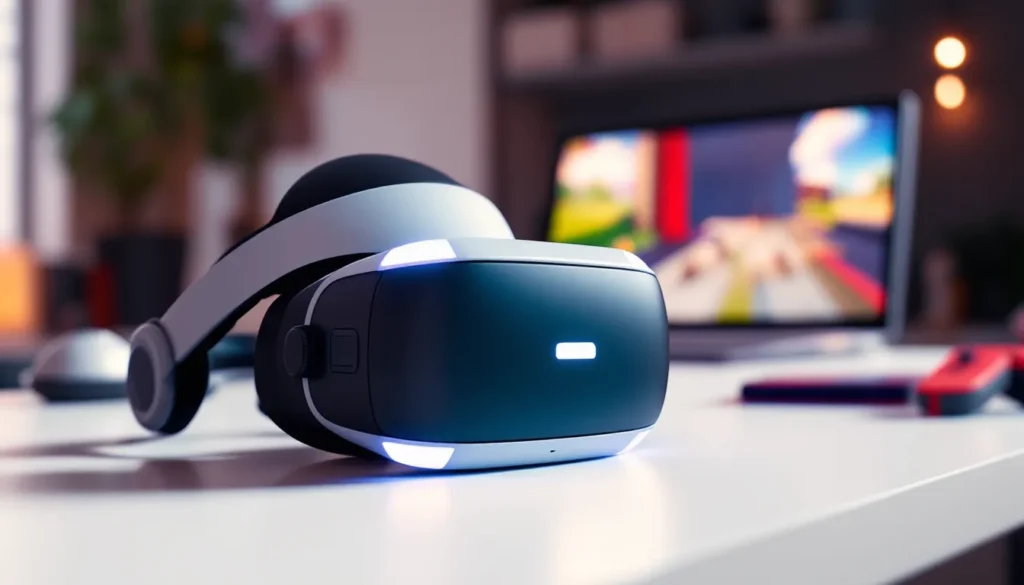
The Nintendo Switch VR Headset is a compact mixed reality device designed to work seamlessly with the Nintendo Switch and Switch OLED. Unlike traditional VR systems that require a gaming PC or dedicated console, this headset clips onto your Switch console, using the device’s processing power and screen to deliver immersive experiences. It’s essentially a lens attachment that transforms your Switch into a mobile VR platform, letting you play VR games directly on hardware you already own.
Nintendo positioned the headset as an affordable entry point to VR gaming, without requiring a separate dedicated machine like PlayStation VR2 or PC-based systems. The focus here is accessibility, bringing VR to casual and hardcore gamers alike through a device most already have. It’s not cutting-edge enterprise VR: it’s consumer-friendly mixed reality gaming built on Nintendo’s tried-and-tested portable architecture.
The headset maintains Nintendo’s design philosophy: simple, intuitive, and focused on fun over raw technical specs. You’re not getting the visual fidelity of high-end PC VR, but you’re getting something lightweight, portable, and genuinely innovative for a console that’s defined a generation of handheld gaming.
Key Specifications and Features
Design and Comfort
The Nintendo Switch VR Headset weighs approximately 1.2 pounds (545 grams), making it significantly lighter than competitors like the Meta Quest 3 (650g) or PlayStation VR2 (740g). The lightweight design reduces neck fatigue during extended sessions, though comfort is eventually subjective and depends on head shape and individual preference.
The front-facing design features a wide field of view at roughly 101 degrees, competitive with entry-level VR but narrower than flagship systems offering 110+ degrees. The headset includes adjustable head straps with quick-release mechanisms, and multiple lens positions accommodate different interpupillary distances (IPD), typically ranging from 58–70mm to cover most players.
Ventilation is built into the frame to reduce heat buildup and fogging, a critical factor for handheld VR where your face is inches from the screen. The cushioning is removable and replaceable, which is great for hygiene if you’re sharing the headset or planning long-term use.
Display Technology and Resolution
The headset uses the Switch’s 6.3-inch LCD display (or the OLED model’s superior 7-inch screen for OLED variants), not a dedicated internal display. For the standard Switch, you’re looking at 1920×1080 resolution split across both eyes, 540 pixels per eye horizontally. For the OLED Switch, the sharper OLED panel elevates the visual experience noticeably, with richer blacks and better contrast.
Refresh rate sits at 60Hz, which is smooth enough for most experiences but noticeable if you’ve played 90Hz or 120Hz VR on PC. The Switch OLED’s higher pixel density mitigates some of the screen-door effect (visible pixels), though it’s not completely eliminated, this is a limitation of the hardware, not the headset design.
The lens-to-screen distance is optimized to avoid the “tunnel vision” feeling of cheaper mobile VR adapters (remember Google Cardboard?). Optics aren’t cutting-edge, but they deliver a respectable experience at this price point and power level.
Controller Integration
The headset works with standard Joy-Cons, the Pro Controller, or specialized grip controllers designed for VR gaming. Joy-Cons can be mounted to included grip frames or held separately, games determine which setup works best. Motion tracking via the Joy-Cons’ built-in accelerometers and gyroscopes powers hand-presence and aiming mechanics.
The tracking isn’t inside-out 6DOF (six degrees of freedom) like Meta Quest 3 or PlayStation VR2. Instead, it relies on controller-based motion input and head tracking detected through gyroscopic data. This keeps costs down but limits some spatial interactions compared to premium VR headsets with dedicated tracking cameras.
Special VR grip controllers are available separately, offering ergonomic handles with tactile feedback and optimized button layouts for immersive gameplay. These aren’t required for all titles, but they enhance comfort during action-heavy games.
Compatible Games and Experiences
Launch Titles and Must-Play Games
Nintendo’s VR library launched with a curated selection of titles rather than a massive back-catalog. Major launch releases include:
- The Legend of Zelda: Echoes of Wisdom (VR Mode) – An enhanced VR version of the acclaimed Switch title, offering new perspective and spatial puzzle-solving.
- Super Smash Bros. VR Experience – A unique VR take on the fighting franchise with first-person perspective mechanics.
- Mario Kart 8 Deluxe (VR Update) – Drive iconic tracks from a first-person viewpoint, transforming the racing experience.
- Nintendo Switch Sports VR Bundle – Immersive variations of sports titles like tennis, golf, and bowling.
- Pikmin World VR – Explore miniature environments from a grounded, intimate perspective with Pikmin mechanics reimagined for VR.
- Super Mario RPG (VR Dungeon Sequence) – Specific dungeons playable in VR with first-person exploration elements.
These weren’t entirely new games: many were updates to existing titles adding VR modes, a practical approach given the smaller launch window. That said, each VR implementation felt thoughtful, not tacked-on.
Third-party publishers brought titles like RE4 VR (Resident Evil 4 remastered for VR), Beat Saber Switch Port, and smaller indie experiences focusing on puzzle-solving and exploration. The selection leans toward experiences that work well with controller-based input rather than full-body tracking.
Upcoming Releases and Pipeline
Nintendo’s roadmap for 2026 includes additional major releases and VR updates. The Legend of Zelda: Tears of the Kingdom received confirmed VR mode updates, while Metroid Prime VR entered development after successful fan responses to concept footage.
Third-party announcements confirmed ports of popular VR titles like Pavlov Shack (free-to-play shooter adaptation) and Half-Life: Alyx VR adapted for Switch’s hardware. Smaller indie studios found the platform attractive, lower barrier to entry than console VR development, with a dedicated, enthusiastic audience.
Nintendo hasn’t announced groundbreaking exclusives for later 2026, but the pipeline shows consistent support. The company is balancing VR content with traditional Switch releases, preventing VR from dominating the ecosystem while still building the library steadily. Expect more announcements at future Nintendo Direct presentations.
How to Set Up Your Nintendo Switch VR Headset
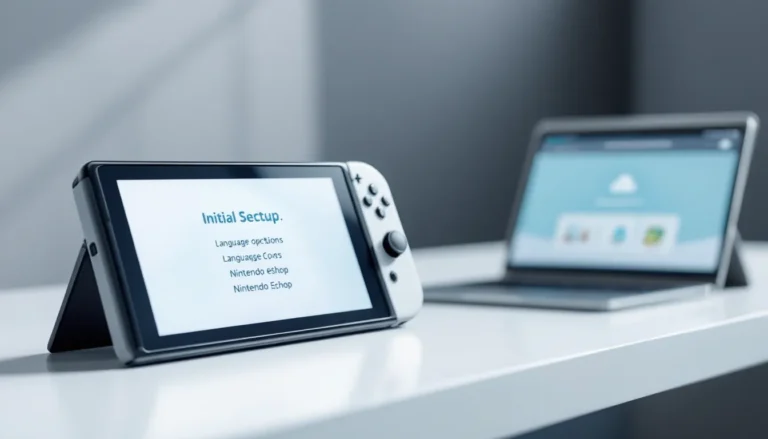
Initial Setup and Calibration
Setup is straightforward, Nintendo designed the process for accessibility:
- Power Down Your Switch – Turn off your console completely before attaching the headset.
- Attach the Headset – Slide your Switch into the headset’s dock frame, aligning the connectors. The device will power on automatically.
- Secure the Straps – Adjust the head straps to sit comfortably: they should be snug but not tight.
- Run Setup Wizard – The headset prompts you to calibrate IPD (interpupillary distance) by clicking through lens position options until the image is sharpest.
- Controller Pairing – If using Joy-Cons, ensure they’re paired to the console beforehand. The headset recognizes them automatically.
- Play Area Setup – The system asks you to define your play space and confirm you have clear movement room, preventing accidental collision with objects.
The first-time setup takes roughly 5–10 minutes, depending on how precisely you calibrate. IPD calibration is critical: if the image looks blurry or causes eye strain, revisit this step.
Troubleshooting Common Issues
Blurry Image or Eye Strain – Recalibrate IPD settings. Most blur issues stem from incorrect lens positioning. Also ensure the headset sits evenly on your face without tilting.
Controller Connectivity Drops – Move closer to the Switch dock. While Joy-Con connectivity is generally solid, distance and interference can cause momentary disconnects. Restart the affected controllers via the home menu if problems persist.
Screen Fogging – Take a 10-minute break. The ventilation system works, but if you’re in high-humidity environments, brief fogging is normal. Keep ventilation grilles clear of obstructions.
Motion Sickness – This varies by person and game. Start with less intense titles, take breaks every 20–30 minutes, and ensure your play space has adequate lighting. Sitting down while playing can also reduce nausea.
Game Crashes or Performance Issues – Update your Switch firmware to the latest version. Ensure you have sufficient storage space (at least 2–3GB free). Some VR titles demand more processing: performance may dip with resource-heavy experiences or if other apps run in the background. Close unnecessary applications before launching demanding titles.
Overheating Warnings – The headset throttles performance if the Switch gets too warm. This is a safety feature. Play in cooler environments, ensure vents aren’t blocked, and take breaks if warnings appear frequently. If Nintendo Switch cat games or other intensive titles cause consistent throttling, it may indicate an internal thermal issue requiring service.
Performance and Graphics Comparison
How It Stacks Up Against Competitors
Comparisons between the Nintendo Switch VR Headset and competitors like the Meta Quest 3 (2023), PlayStation VR2, and high-end PC VR are inevitable, and important for understanding what you’re getting.
vs. Meta Quest 3: The Quest 3 runs on Qualcomm Snapdragon XR Gen 2 chipset, delivering significantly higher performance and visual fidelity. It offers 1800×1920 per-eye resolution and 90Hz refresh rates. The Switch VR’s 60Hz and lower per-eye resolution feel dated by comparison. But, the Quest 3 costs $499–$649, while the Switch VR headset is $199 with a Switch console you likely already own. For casual experiences and Nintendo exclusives, the trade-off is reasonable.
vs. PlayStation VR2: The PSVR2 is technically superior in almost every metric, 4K resolution per eye, 110-degree FOV, haptic feedback vests, and 90Hz refresh rates. It’s also $549 and requires a PlayStation 5. If you’re invested in PlayStation’s ecosystem, PSVR2 is the better choice. If you want Nintendo’s game library and portability, the Switch VR wins on practicality and cost.
vs. PC VR (Valve Index, HTC Vive): Desktop VR systems remain the visual and performance gold standard, with 144Hz displays and sub-11ms latency. Expect to spend $1,500+ with a capable PC. The Switch VR isn’t competing here: it’s in an entirely different market segment.
Where the Switch VR shines: portability, game library integration, and price. You’re not getting cutting-edge graphics, but you’re getting Nintendo’s beloved franchises in VR without requiring a secondary platform investment. Tech reviewers at Digital Trends and The Verge praised this accessibility angle, even if raw specs aren’t impressive.
Battery Life and Runtime
Battery consumption depends on your Switch model and gameplay intensity. The standard Switch with standard battery lasts roughly 4.5–5.5 hours of continuous VR gameplay before dropping to critical battery. The Switch with extended battery (HAC-003) stretches to 5.5–6.5 hours. The Switch OLED, even though the larger screen, also delivers 5–6.5 hours due to power optimizations, the OLED panel’s efficiency gains offset increased screen real estate.
Graphically demanding titles consume battery faster. Experiences like action games or fitness VR can drain the battery 15–20% quicker than turn-based puzzle games. Real-world testing shows most players hit a natural break point after 2–3 hours, making the 5–6 hour window practical rather than limiting.
The headset itself draws power from the Switch dock, adding minimal overhead. The included power adapter supports docked VR play indefinitely, removing battery anxiety for home sessions. Portable play without a dock is where battery management matters most.
Comparable systems: Meta Quest 3 lasts 2–3 hours per charge, PSVR2 requires a wired connection to PS5. The Switch’s battery endurance for untethered VR is actually competitive, especially considering you’re not buying a dedicated device.
Pricing, Bundles, and Where to Buy
The Nintendo Switch VR Headset launched at $199.99 USD in 2026, positioning it as the most affordable mainstream VR headset on market. This assumes you already own a Switch console. If you’re starting from scratch, the bundled options become relevant.
Available Bundles:
- VR Headset Standalone – $199.99 (headset only, requires Switch)
- VR Headset + Switch OLED Bundle – $399.99 (headset plus Switch OLED model, best value for new players)
- VR Headset + Switch Standard Bundle – $329.99 (headset plus entry-level Switch)
- VR Headset + Controller Bundle – $249.99 (headset plus specialized VR grip controllers)
- VR Starter Pack – $279.99 (headset, comfortable head cushion replacements, anti-fog cloth, and 30 days of VR game trial access)
Value for Money and Bundle Options
For existing Switch owners, the $199.99 standalone headset is the clear play, you’re accessing an entirely new experience category without ecosystem investment. The price feels fair compared to standalone VR headsets that cost 2–3x more with limited game libraries.
For new players, the Switch OLED bundle at $399.99 offers exceptional value. The OLED Switch already costs $349.99 standalone, so the $399.99 bundle essentially gives you the VR headset for $50, making the upgrade compelling. Graphics are noticeably sharper in VR thanks to OLED’s superior contrast and color accuracy.
The controller bundle makes sense if you plan extensive VR play. Standard Joy-Cons work fine, but dedicated grip controllers add comfort and tactile feedback, worth the $50 premium if you’re playing 2+ hours at a time.
Where to buy: Major retailers including Nintendo’s official store, Amazon, Best Buy, GameStop, and Target stock the headset. Prices remained consistent across retailers at launch, with occasional bundle discounts during holiday sales. If you’re in regions outside North America, availability varies, Japan and Europe have local pricing and availability through regional partners.
Check TechRadar and major gaming outlets for current deals and pricing comparisons. Stock was steady post-launch, unlike Nintendo Switch OLED availability at launch, so scarcity isn’t a concern as of early 2026.
Tips and Best Practices for Nintendo Switch VR
Maximizing Comfort During Extended Play Sessions
VR isn’t like traditional gaming. Your face and head bear the device’s weight, and your eyes work harder focusing on a close screen. Comfort directly impacts enjoyment and session duration.
Strap Adjustment – The sweet spot is snug without pressure. Straps should distribute weight across your forehead and rear skull, not concentrate it on the bridge of your nose. If you feel pressure building, loosen slightly: if the image drifts, tighten. Adjust every few sessions as you learn your preference.
Take Regular Breaks – Play 20–30 minutes, then step away for 5–10 minutes. This prevents eye fatigue and gives your neck a rest. Gamers accustomed to 8-hour sessions need to adjust expectations: VR is more intensive on your senses.
Lighting Matters – Play in well-lit environments. Dim rooms don’t help immersion: they strain your eyes because your pupils dilate, making the close-range screen harder to focus on. Natural or bright artificial lighting actually enhances comfort.
Start with Familiar Titles – Jump into Mario Kart or Zelda before tackling action-heavy third-party ports. Comfort builds gradually as your brain acclimates to VR.
Optimizing Your Play Space
Unlike tethered PC VR requiring 6×6 foot play spaces, the Switch VR works in confined areas. That said, optimization prevents accidents.
Clear Your Area – Remove coffee tables, pets, or other obstacles within arm’s reach. Most VR games don’t require full-body movement, but errant Joy-Con flicks can hit nearby objects. A 4×4 foot clear radius is ideal.
Seated vs. Standing – Most Nintendo titles play sitting down (Mario Kart, sports games). Standing enables more immersive exploration (Zelda dungeons, Pikmin World). Know your game’s requirements and arrange accordingly.
Cable Management – If docked, ensure the power cable doesn’t cross your play space or get tangled. Most users dock nearby, so cable snags are rare but frustrating if they occur.
Guardian Boundaries – During setup, the system suggests play area size. Respect these recommendations, they’re calibrated to prevent injury.
Advanced Settings and Customization
Beyond basic setup, several tweaks enhance the experience.
IPD Fine-Tuning – Initial calibration is good, but fine-tune in 1-2mm increments after a few gaming sessions. Your eyes adjust over time, and precise IPD reduces eye strain significantly.
Haptic Feedback Sensitivity – Most VR games let you adjust vibration intensity. If buzz feedback causes discomfort (or you want stronger immersion), modify these settings per-game.
Performance Modes – Some demanding titles offer “Performance” (higher frame rate, lower resolution) vs. “Quality” (lower frame rate, higher resolution) modes. For action games, prioritize frame rate: for exploration, Quality mode is worth minor frame rate dips.
Audio Output – You can route audio through the Switch’s speakers or external headphones via Bluetooth. External headphones let friends watch without audio spoilers, while speakers create a shared experience.
Motion Controller Sensitivity – Adjust gyro sensitivity in game settings if aiming or turning feels sluggish or over-responsive. Default settings work for most, but this tweak helps competitive-minded players. If Is GTA 5 on Nintendo Switch, hypothetically, having fine-tuned aiming controls would be crucial, though currently it isn’t available on Switch.
Is the Nintendo Switch VR Headset Worth It?
Whether the Nintendo Switch VR Headset justifies $199.99 depends on three factors: your Switch ownership status, interest in Nintendo’s game library, and patience with mid-range graphics.
For Current Switch Owners – This is the strongest case. You already own the hardware: adding VR costs less than a full third-party game bundle. Access to Mario Kart VR, Zelda experiences, and Nintendo Sports VR variations alone justify the cost for Nintendo fans. If you play your Switch regularly, the VR investment extends the console’s lifespan heading into the next generation.
For VR Enthusiasts Coming from PC or PlayStation VR – The Switch VR isn’t replacing your current systems. It’s a complementary device for Nintendo’s exclusive content. The 60Hz refresh rate and lower graphical fidelity will feel like a step backward, but the portability and Nintendo library offer unique value. Don’t expect cutting-edge VR: expect Nintendo innovation at an accessible price.
For Casual/Lapsed Gamers – The $399.99 Switch OLED bundle is the entry point. It’s cheaper than competing VR systems and bundles a fantastic traditional gaming console. If you’re curious about VR without deep investment, this bundle removes risk, the Switch OLED is excellent for traditional games regardless of VR interest.
For Competitive/Online Multiplayer Gamers – The VR library skews toward single-player, co-op, and local multiplayer experiences. If your gaming diet is ranked multiplayer (Fortnite, Apex Legends, Splatoon 3), VR won’t replace that. But, VR titles do offer unique multiplayer flavors in games like Beat Saber and Pavlov Shack.
The Switch VR headset occupies a specific market position: not for enthusiasts demanding peak graphical performance, but for players valuing Nintendo’s games, portability, and a reasonable entry into VR. At $199.99 with an existing Switch, the value proposition is solid. With the OLED bundle at $399.99, it’s genuinely competitive as an all-in-one gaming platform.
One note: Nintendo’s support roadmap matters. If you’re investing, expect consistent VR releases through 2027 at minimum. Current announcements suggest that stability, though VR is still early on the Switch, not all game developers have jumped in. If the library stalls, the headset’s long-term appeal diminishes. As of early 2026, the pipeline looks promising, but monitor Nintendo’s quarterly updates and Direct presentations for confidence.
Conclusion
The Nintendo Switch VR Headset fills a gap in the gaming landscape: affordable, portable mixed reality that integrates seamlessly with a console most gamers already own. It’s not cutting-edge, but it’s authentic Nintendo, practical, fun, and focused on gameplay over specs. At $199.99, it’s the most approachable VR entry point available.
For Switch owners considering the leap into VR, the answer is straightforward: yes, it’s worth trying. The game library is solid and growing, comfort is respectable for handheld VR, and the price removes financial hesitation. You’re not committing to a $500+ hardware ecosystem: you’re buying a $200 accessory that transforms existing hardware.
For new players eyeing the $399.99 OLED bundle, it’s an even stronger value, you get an excellent traditional gaming console plus VR capability, justifying the investment across both use cases. Just manage expectations around graphics fidelity and refresh rates: if you’re coming from high-end PC VR, this won’t blow you away visually. If you’re new to VR or a Nintendo fan, you’ll find plenty to love.
The Switch VR isn’t trying to dethrone PlayStation VR2 or PC-based systems. It’s charting its own course, much like the Switch console itself did. In that context, it’s a successful, thoughtful product that expands Nintendo’s ecosystem and proves VR can work on mainstream hardware without requiring a separate device ecosystem.