



Table of Contents
ToggleYour Nintendo Switch is a gateway to thousands of games, from sprawling open worlds to competitive multiplayer battles. Whether you’re playing handheld on the commute, docking at home, or taking your console to a LAN tournament, one thing’s certain: you need protection. A good Nintendo Switch case isn’t just about preventing drops: it’s about preserving your gaming investment while maintaining the portability that makes the Switch special. In 2026, the case market has exploded with options ranging from minimalist sleeves to feature-packed rigs that rival small backpacks. The trick is finding the right balance between protection, portability, and practicality for your specific playstyle.
Key Takeaways
- Investing in the right Nintendo Switch case protects your $300+ console investment while balancing protection, portability, and personal playstyle.
- Hard shell cases offer maximum durability for travelers and competitive players, while soft cases and folio designs provide better portability for commuters and casual gamers.
- Key features to prioritize include impact resistance with reinforced edges, compartment organization for cartridges and accessories, and compatibility with your specific Switch model (Original, OLED, or Lite).
- Mid-range cases ($25–$45) offer the best value, combining quality padding, durable zippers, and multiple compartments without premium pricing.
- Regular maintenance—including zipper care, padding inspection, and proper moisture management—extends your case’s lifespan and keeps your Switch protected long-term.
Why Choosing the Right Switch Case Matters
Your Nintendo Switch costs somewhere between $300–$350, and that’s before factoring in your game library, screen protectors, and accessories. A drop from a desk, a spill in a backpack, or even prolonged exposure to moisture can turn your console into an expensive paperweight.
The right case does more than cushion impact, it organizes your gaming ecosystem. You’ll carry Joy-Cons, game cartridges, cables, and maybe a stand or protective film. A poorly designed case forces you to pack these items haphazardly, risking scratches on your screen or bent cartridges. A well-designed one compartmentalizes everything, so you grab your Switch and go.
Beyond practicality, your case reflects how you game. A sleek carrying case signals “I’m serious about portability.” A rugged hard shell says “I’m taking this anywhere.” A custom-designed folio communicates personal style. On top of that, certain case types better serve specific lifestyles, commuters need compact, lightweight options: competitive players demand quick access and durability: casual home gamers might prioritize aesthetics over minimal bulk.
Types of Nintendo Switch Cases
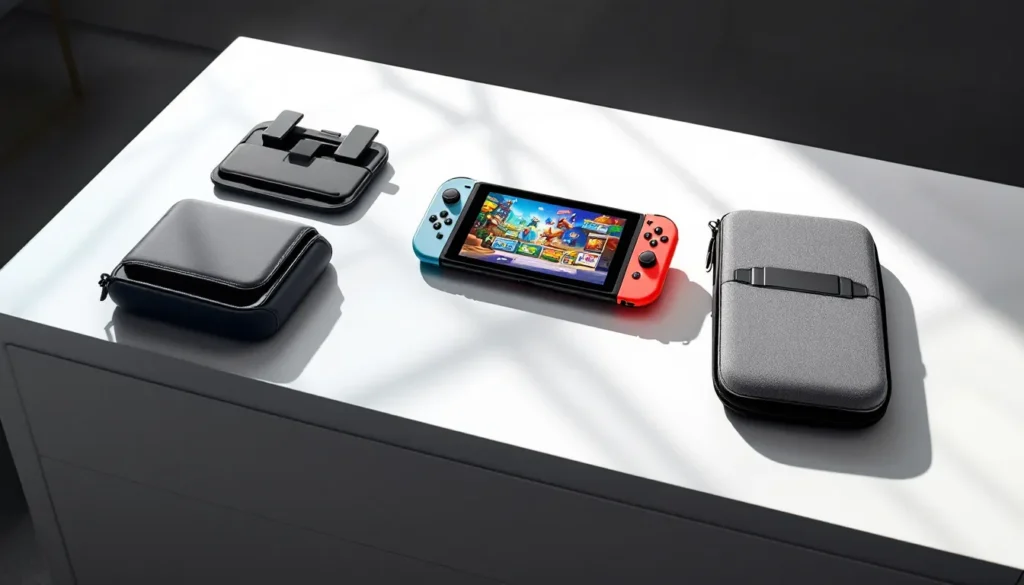
The Switch case market has fragmented into distinct categories, each with unique strengths. Understanding the differences helps you narrow down what’ll actually fit your routine.
Hard Shell Cases
Hard shell cases are the tanks of Switch protection. Usually made from EVA (ethylene-vinyl acetate) foam or rigid plastic, they absorb drops and impacts that would crack softer materials. They’re ideal if you’re rough with gear or traveling through chaotic environments.
The trade-off? Weight and bulk. Hard shells add a notable footprint to your bag, and they’re overkill if you’re just moving between your couch and bedroom. They also tend to be pricier, with quality options running $30–$60. Most hard cases accommodate the Switch plus a handful of game cartridges, and better ones include compartments for cables or headphones. If durability is your top concern, especially for travel or esports events, a hard shell is your move.
Soft Carrying Cases
Soft carrying cases offer a middle ground between protection and portability. These are typically padded fabric sleeves that fit the Switch snugly, with reinforced corners and soft lining to prevent scratches.
Soft cases are lighter and more compact than hard shells, making them excellent for everyday carry. They pack down easily in backpacks and don’t scream “gaming gear.” Most retail for $15–$35. The downside is that they don’t shield against sustained pressure or impacts as effectively as hard shells. If you drop your Switch from table height into a soft case, it’ll survive. Drop it from a height or with force, and you might get lucky, or not.
Flip Cases and Folio Designs
Flip cases and folio designs combine a carrying case with a stand. The console slides into a padded interior, and when you want to play handheld with a kickstand, you flip open the exterior cover to prop up the screen.
These are popular among handheld-focused gamers who avoid docking. They’re protective, stylish, and consolidate your case and stand into one item. But, they’re bulkier than sleeves and typically more expensive ($30–$50). They also work best if you primarily use handheld mode: docking becomes a hassle since you’d remove the case entirely. Some folio cases integrate storage for a handful of cartridges or a single pair of Joy-Cons, but they’re not designed for large cartridge libraries.
Hybrid Cases
Hybrid cases attempt to do everything: protect your docked Switch in its dock while also offering a removable carrying sleeve for on-the-go play. These are relatively niche and tend to be bulky, but they appeal to players who want maximum flexibility without juggling multiple cases.
Hybrid designs are harder to find and often custom-made, pushing prices north of $50. They shine if your Switch spends time both at home (docked) and traveling, and you want a single solution. Otherwise, they’re overengineered for most players.
Key Features to Look For in a Switch Case
Not all cases are created equal. When evaluating options, prioritize these core features based on your needs.
Protection and Durability
Impact resistance is the headline feature. Look for cases with reinforced edges and multi-layer padding, especially around corners where drops typically cause damage. EVA foam or neoprene lining is standard: some premium cases use specialized shock-absorption materials.
Screen protection matters too. Your Switch’s screen is prone to scratches from loose cartridges or debris. Better cases include rigid dividers or a soft felt lining to cradle the console safely. If the case doesn’t isolate the screen, consider pairing it with a tempered glass screen protector.
Water resistance is increasingly common in 2026. A splash-resistant outer shell or sealed compartments prevent moisture damage, especially useful if you commute via bike or public transit in rainy climates. Most cases are splash-resistant rather than fully waterproof, so don’t submerge your Switch expecting miraculous survival.
Portability and Weight
A protective case that weighs as much as a textbook defeats the point of owning a portable console. Check the weight specifications, especially if you’re carrying it daily. Quality soft cases typically weigh 3–6 ounces: hard shells range from 8–14 ounces.
Consider the size when packed. Does it fit in a standard backpack side pocket, or does it hog your main compartment? Compact cases that accommodate just the console and Joy-Cons are easier to slip into a bag than cases designed for entire accessory setups.
Storage Capacity
How many cartridges do you actually need to carry? If you rotate games weekly, two or three cartridge slots suffice. If you’re an accumulator who wants options, look for cases with six to ten cartridge compartments. Some cases have clever modular designs that let you customize storage based on what you’re traveling with.
Do you need room for cables? A carrying case designed for travel might include a slot for your charging cable, USB hub, or headphones. Home-focused cases often skip this, which is fine if you’re not traveling.
Design and Aesthetics
Your case is visible to anyone around you. Some prefer understated, professional designs that blend in. Others want bold colors or licensed artwork from their favorite franchises. In 2026, manufacturers offer everything from minimalist black sleeves to cases adorned with Zelda, Mario, or Pokémon artwork.
Beyond appearance, consider practicality. A glossy case looks slick but shows fingerprints and dust. A matte finish hides grime but can feel less premium. Textured exteriors provide grip, which matters if you’re carrying your case in one hand.
Cases for Different Gaming Lifestyles
Your ideal case depends on how and where you play. Different use cases demand different features.
For Home and Casual Players
If your Switch lives on your TV stand or nightstand, you don’t need Fort Knox protection. A soft sleeve or folio case stored in a closet or cabinet is plenty. You’re not subjecting your console to drops, rain, or rough handling, just protecting it from dust and accidental bumps.
Priority: Storage and aesthetics. Since you’re not traveling, weight and compactness don’t matter. Pick something that looks good on your shelf or in your entertainment cabinet. Folio cases appeal to this group because they function as both case and stand, and they’re visually interesting. Price-conscious casual gamers often opt for soft sleeves in the $15–$25 range, functional without very costly.
Bonus consideration: If you have kids or pets, a hard case protects against more aggressive mishaps.
For Commuters and Travelers
You’re throwing your Switch into a backpack, stuffing it in a carry-on, or sliding it into a desk drawer multiple times daily. Your case absorbs bumps from crowds, gets squished by other items, and needs to survive weather.
Priority: Portability, durability, and organization. You want something light enough that you don’t notice it in your bag, padded enough to survive daily abuse, and organized enough that you’re not digging for game cartridges. Soft cases with multiple compartments or compact hard shells ($25–$50) hit the sweet spot. Make sure the case fits your commute reality, a bus commute has different hazards than biking or driving.
Consider water resistance if you’re in a rainy climate. Also think about visibility: a case that stands out makes it easier to spot in a crowded security line or lost-and-found.
For Competitive Gamers
You’re traveling to tournaments, LAN events, or meetups where your Switch is central to the experience. Your case needs to withstand transit, quick access during events, and the occasional jostle from other competitive gear.
Priority: Durability, accessibility, and organization. Competitive gamers typically carry multiple controllers, custom controllers, portable chargers, adapters, and backup cartridges. You need a robust hard shell with compartments for everything, plus quick access, you don’t want to fumble around finding your controller at the tournament start.
Look for hard cases with modular dividers ($40–$70+) that let you organize your exact loadout. Some competitive gamers invest in custom foam inserts that fit their specific gear. A case with an external strap or luggage attachment makes it easy to secure your setup to a travel bag. The extra weight and bulk are worth it when your console and controllers are your livelihood (or serious hobby).
Compatibility Considerations
Not all Nintendo Switch cases are created equal, and not all Switches are the same either.
Original Switch vs. Switch OLED vs. Switch Lite
The original Nintendo Switch (released 2017) remains the standard form factor. Most cases on the market are designed for this model. If you own the original, you have the widest selection.
The Nintendo Switch OLED (released 2021) has the same footprint and Joy-Con layout as the original, so it fits in original Switch cases, but the OLED model is slightly thicker due to its revised internals and sturdier dock. Some cases designed specifically for the original Switch feel snug or slightly loose on the OLED. When shopping, verify that cases are compatible with the OLED. Most newer cases explicitly state “Compatible with Switch OLED,” so check the product description.
The Nintendo Switch Lite is smaller and doesn’t have detachable Joy-Cons, so it requires dedicated cases. If you own a Lite, you can’t use standard Switch cases, don’t waste money trying. Switch Lite cases are cheaper (typically $10–$30) because they’re more compact, but selection is narrower.
A practical tip: If you’re considering a Switch upgrade, think about case compatibility. Investing in cases for the original Switch limits your flexibility if you eventually switch to an OLED model (or vice versa).
Accessibility With Accessories
Consider what you’re actually carrying alongside your console. Can your case accommodate a Nintendo Switch Joy-Con grip while the console is still inside? Some cases are tight enough that removing Joy-Cons is mandatory, while others have room to spare.
Do you use a portable stand? Folio cases integrate stands, but other cases don’t. If your stand is external, confirm it fits in a dedicated compartment.
What about screen protectors? A tempered glass protector adds minimal thickness, but a full case-style screen guard might not fit inside certain cases. Measure your accessories against the case’s interior dimensions if you’re unsure.
For competitive players, compatibility with custom controllers or arcade sticks matters. Portable arcade sticks designed for the Switch won’t fit inside a standard case, so you’d need a larger carry bag anyway.
Budget-Friendly vs. Premium Options
Nintendo Switch cases range from $10 sleeves to $100+ custom cases. Understanding the value at each price tier helps you avoid overpaying or cutting corners.
Budget tier ($10–$20): You’re getting basic protection, usually a padded soft sleeve with minimal compartments. These cases protect against drops from table height and everyday jostling, but not sustained impacts. They’re light, compact, and perfectly adequate if you rarely travel or play rough. The downside: build quality is inconsistent, and lifespan might be 1–2 years before zippers fail or padding degrades. Great for casual players or as a backup case.
Mid-range tier ($25–$45): This is the sweet spot for most gamers. You get quality padding, reinforced corners, multiple compartments, and durable zippers. These cases feel solid and typically last 3–5 years. Hard shells in this range offer serious impact protection: soft cases at this price are feature-rich. Brands competing in this tier have strong reputations (like renowned gaming peripheral manufacturers), so reviews matter. This is where you spend if you want reliability without extravagance.
Premium tier ($50+): You’re paying for aesthetics, specialized materials, brand prestige, or customization. Premium cases might feature genuine leather, designer collaborations, or modular systems. They’re not inherently “better” at protecting your Switch than mid-range options, but they offer longevity and style. Custom foam inserts, specialized shock absorption, or licensed artwork justify the premium for collectors or competitive players who want their gear to reflect their identity.
A practical rule: Don’t spend more on a case than you would on a single new game (around $60). If you find yourself looking at a $80 case, ask whether that money would be better spent on additional games or accessories.
One more note: Some retailers reference external tech reviews when evaluating case quality, and Nintendo-specific communities often maintain case recommendation threads worth checking before you buy. Crowd wisdom saves money and prevents buyer’s remorse.
Maintenance and Care Tips
A good case protects your Switch, but your case needs care too.
Cleaning: Periodically wipe down the exterior with a soft, damp cloth to remove dust and grime. For stubborn marks, a microfiber cloth (the kind used for screens) and a tiny drop of water work well. Avoid harsh chemicals or abrasive materials that scratch the case’s finish. If your case has a fabric exterior, a lint roller removes dust without damaging fibers.
Zipper maintenance: Zippers are the first thing to fail on cases. If a zipper starts sticking, rub a graphite pencil or wax-based lubricant along the teeth (not the fabric). Keep the zipper dry and avoid forcing it. If it tears or gets permanently stuck, the case’s lifespan is essentially over, you can’t easily replace the zipper.
Padding preservation: Over time, padding compresses and hardens. You can’t truly “rejuvenate” padding, but keeping your case away from extreme heat (like a car dashboard in summer) slows the process. Store your case in a cool, dry place. If padding is getting thin and your Switch is sliding around inside, it’s time for a replacement.
Moisture management: Even if your case isn’t waterproof, moisture is the enemy. If your case gets wet, open all compartments and air-dry it completely before storing your Switch inside. Trapped moisture leads to mold and electronics damage. Some gamers toss silica gel packets inside their cases during storage in humid climates, not a bad practice for long-term care.
Inspection routine: Every few months, pull your Switch out and inspect the case’s interior. Look for ripped lining, broken compartments, or loose padding. Catching small damage early prevents it from worsening. If padding is peeling away from the shell, a bit of fabric glue fixes it temporarily, but professional repair or replacement is better long-term.
If you own multiple cases (which some serious gamers do), rotate them. Using one case constantly accelerates wear: rotating spreads the load. Plus, having a backup case means you’re not without protection if your primary case needs repair.
Conclusion
Choosing a Nintendo Switch case is less about picking the “best” option and more about matching your specific needs and budget. A casual home player and a competitive tournament regular have wildly different requirements, and that’s perfectly fine. The right case for you is one that aligns with how you actually play.
Start by identifying your lifestyle: Are you stationary or mobile? Do you need cartridge storage? How much impact will your case realistically take? Once you answer those questions, narrow your choices by price tier and feature set. Read recent reviews and user feedback, especially from people describing use cases similar to yours. Most reputable gaming retailers provide detailed specifications and customer photos, which reveal real-world fit and finish.
Remember, your Nintendo Switch is an investment that deserves protection. Whether you’re carrying it on your commute, traveling to a tournament, or just keeping it dust-free at home, the right case extends your console’s lifespan and ensures you’re ready to game whenever inspiration strikes. In 2026, you have more options than ever, take advantage of that variety and find the case that makes your gaming life easier.