
Table of Contents
ToggleThe original Nintendo Switch launched in March 2017, and here we are in 2026, still talking about it. That’s not nostalgia: that’s proof the console nailed something fundamental about how we want to play games. While the Switch OLED and Switch Lite have carved out their own spaces in Nintendo’s lineup, the original model remains a masterclass in hardware design and an absolute powerhouse when it comes to its game library. If you’re considering grabbing an original Nintendo Switch today, whether as a second-hand pickup or a nostalgia trip, you need the real picture: what it can still do, what’s changed, and whether it’s worth your time and money in a landscape that’s shifted dramatically since 2017.
Key Takeaways
- The original Nintendo Switch’s hybrid design—with dockable, detachable Joy-Con controllers—remains a masterclass in flexibility, allowing seamless transitions between TV, handheld, and tabletop gaming modes.
- While the original Nintendo Switch shows its age with 30fps performance in demanding titles and degraded batteries on used units, its exclusive game library (Breath of the Wild, Mario Odyssey, Smash Bros Ultimate) justifies ownership in 2026.
- Joy-Con drift is a persistent issue on original models, but affordable DIY replacement kits ($5–10) and Nintendo’s generous repair policy make it a manageable maintenance cost rather than a dealbreaker.
- Used original Nintendo Switches cost $150–300 depending on condition, making them significantly cheaper than the $350 Switch OLED while offering better docking capabilities and detachable controllers than the Lite.
- The original Nintendo Switch is worth buying in 2026 if you prioritize affordable hybrid gaming, exclusive Nintendo titles, and local multiplayer over cutting-edge performance and display quality.
- Battery degradation is inevitable on used original Switch units (expect 3–5 hours of play versus the original 6–6.5 hours), and thermal throttling in handheld mode means extended gaming sessions will show performance dips.
What Made The Original Nintendo Switch A Game-Changer
The Design Philosophy Behind The Hybrid Console
The original Nintendo Switch’s core brilliance was solving a problem nobody explicitly asked for but everyone immediately understood once they held it: why should you choose between a home console and a portable device? Nintendo didn’t invent the idea of hybrid gaming, but they executed it in a way that felt inevitable.
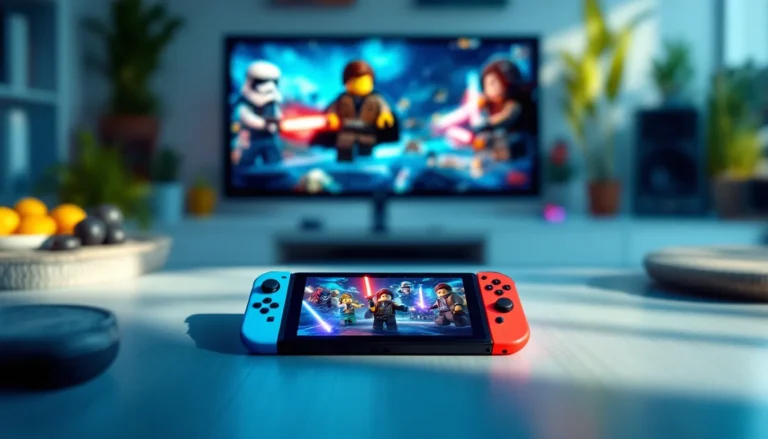
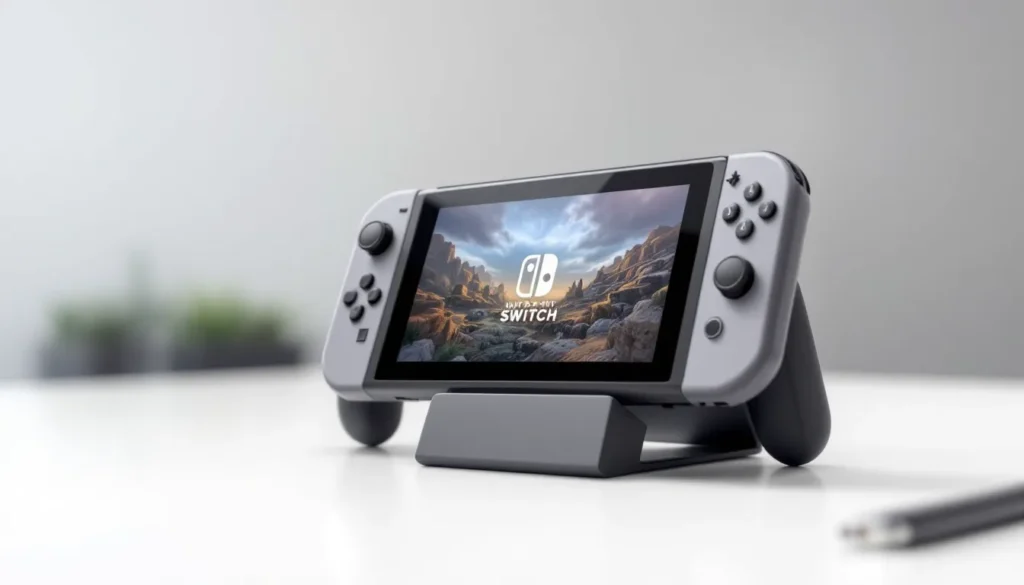
The Joy-Con controllers, those detachable, motion-enabled controllers, were the linchpin. They let you dock the console for a full home experience, flip the kickstand for tabletop mode, or undock and use them as individual controllers for handheld play. It sounds simple in retrospect, but it fundamentally changed how people approached game sessions. You could start The Legend of Zelda: Breath of the Wild on your TV, transition to handheld on your commute, and keep playing docked somewhere else entirely.
Nintendo‘s philosophy with the original Switch was all about freedom and flexibility. The industrial design is clean, the build quality felt premium at launch, and the color options, particularly the Neon Red and Neon Blue models, gave it immediate visual identity. This wasn’t a gaming PC squeezed into a handheld form factor: it was a rethinking of what a console could be.
Technical Specifications And Hardware Capabilities
Processor, RAM, And Storage Details
Let’s get specific. The original Nintendo Switch runs on an NVIDIA Tegra X1 processor, paired with 4GB of RAM (3GB dedicated to games) and 32GB of internal storage. That storage is where things got messy at launch, a 128GB microSD card quickly became essential, and Nintendo never included one in the box. If you’re buying used, check if the card comes with it.
The Tegra X1 is an ARM-based processor designed for mobile devices, which was the right call for a hybrid console. It doesn’t compete on raw horsepower with a PS5 or Xbox Series X, but it’s capable enough to run the entire Nintendo Switch library with impressive performance per watt.
Display And Audio Features
The original Switch uses a 6.2-inch LCD display with 1280×720 resolution in both handheld and docked modes. It’s not 4K, the Switch OLED bumped to the same resolution with better contrast and colors, and the Switch Lite’s 5.5-inch screen feels cramped by comparison. The 720p resolution on a 6.2-inch screen gives you decent pixel density for handheld play, though docked gameplay shows its limitations on modern TVs.
Audio comes through built-in stereo speakers that are perfectly adequate for handheld gaming. For docked play, you’ll definitely want a proper sound system, the Switch’s internals don’t deliver enough oomph for immersive sound design. Dock the console to any TV with HDMI, and you get full audio/video output without loss of quality. Headphone jack? Gone. You need Bluetooth audio or USB-C connected headphones.
How The Original Switch Compares To Modern Gaming Hardware
Performance In 2026: Does It Still Hold Up?
Here’s the honest truth: the original Switch’s hardware is showing its age. In 2026, it runs games at locked 30fps in many demanding titles. The Legend of Zelda: Breath of the Wild hits 30fps docked and can dip lower handheld. Mario Kart 8 Deluxe maintains 60fps consistently. Newer AAA ports often ship at 720p/30fps docked, and some developers have abandoned Switch entirely because the delta between original hardware and current-gen consoles is too wide.
But here’s what matters: the games that shipped specifically for the Switch were designed around its hardware. Super Smash Bros. Ultimate, Animal Crossing: New Horizons, Fire Emblem: Three Houses, these play beautifully on original hardware because they weren’t ported from elsewhere. Performance stability and actual gameplay experience are two different conversations.
The original Switch’s thermal design also means sustained performance in handheld mode can cause throttling under heavy load. The Switch OLED improved this significantly, but if you’re eyeing an original model, understand that long marathon sessions in handheld mode will see some performance dips in demanding games.
Comparison With Switch OLED And Switch Lite
Let’s break down the hardware tiers:
Original Switch vs. Switch OLED:
- Display: Original has 6.2″ LCD: OLED has 6.9″ OLED with superior contrast and colors. OLED is objectively the better screen.
- Performance: Identical processors, the OLED’s real advantage is thermal management, not raw power.
- Price: Original models (used) run $200–250: OLED new models are $350. The used original is the budget option.
- Speakers: OLED has slightly better audio output, but you still won’t want to use them for serious gaming.
Original Switch vs. Switch Lite:
- Portability: Switch Lite is smaller, lighter, and built exclusively for handheld play. Original is 9.9 ounces: Lite is 5.3 ounces.
- Docking: Original docks to TV: Lite requires a separate dock (sold separately) and USB-C output. Original is more straightforward.
- Joy-Con separation: Original Joy-Cons detach fully: Lite has built-in controllers. Detachable Joy-Cons are invaluable for compatibility and local multiplayer.
- Price: Lite new is $199–249: original used is $200–300. Lite wins on price if you don’t care about TV docking.
The original Switch is the middle ground: more capable than the Lite (full docking, detachable controllers), older hardware than the OLED, and significantly cheaper used than OLED new.
The Library Of Games Worth Playing On The Original Switch
Exclusive Titles That Defined The Console
The original Nintendo Switch’s greatest asset isn’t hardware, it’s the library of games that practically define the console. These are must-plays that legitimize owning the hardware:
- The Legend of Zelda: Breath of the Wild (2017): Launched alongside the console and redefined open-world design. Still holds up as a masterclass in player agency and exploration.
- Super Mario Odyssey (2017): 3D platforming perfection. The possession mechanic (Cappy) makes nearly every level inventive and surprising.
- Mario Kart 8 Deluxe (2017): The definitive battle royale on Switch. Solid 60fps, endless replayability, and the best local multiplayer on the system.
- Super Smash Bros. Ultimate (2018): The most complete fighting game ever shipped. 89 characters, incredible depth, and a huge competitive scene. Esports players still compete on original hardware at some tournaments.
- Animal Crossing: New Horizons (2020): A cultural phenomenon that proved you don’t need cutting-edge graphics for a mega-hit. Casual but endlessly engaging.
- Fire Emblem: Three Houses (2019): Tactical RPG with genuine branching narrative paths. Over 100 hours of content across four playthroughs.
- Splatoon 3 (2022): Fast-paced competitive shooter. The motion aiming is revelatory once you dial it in.
Third-Party Games And Hidden Gems
Third-party support on Switch has always been solid, though demanding ports sometimes suffer:
- The Witcher 3 (2019): Looks rough compared to other platforms, but on the commute? Revolutionary.
- DOOM (2016) and DOOM Eternal: Impressive ports that prove the Tegra X1 can handle shooters.
- Hollow Knight: Metroidvania masterpiece, runs flawlessly, $15. No brainer.
- Hades: roguelike that actually improves on smaller screen due to faster pacing.
- Stardew Valley: Cozy farming sim perfect for handheld. Hundreds of hours available.
- Rocket League: Free-to-play competitive soccer. The community on Switch remains active even though resolution dips.
Third-party support has thinned in 2025–2026 as developers focus on next-gen hardware, but the Switch catalog still boasts thousands of titles. Many indie games run better on Switch than on competitors due to optimization.
Maintenance, Repairs, And Common Issues
Joy-Con Drift: The Persistent Problem And Solutions
If there’s one conversation that haunts the original Nintendo Switch community, it’s Joy-Con drift. The analog sticks on Joy-Con controllers develop phantom inputs over time, your character moves on-screen even with the stick untouched. It affects original models, and Nintendo has acknowledged it’s a widespread issue.
Why does it happen? The joystick uses a small potentiometer that can wear out from repeated use or accumulate debris. There’s no manufacturing defect causing all Joy-Cons to fail: rather, the design wasn’t robust enough for extended use.
Solutions:
- Contact Nintendo: They’ve been generous with free repairs, even out of warranty. Send in your controller: they replace the stick module.
- DIY replacement: Replacement Joy-Con stick modules cost $5–10 on Amazon. You need a small screwdriver set and about 10 minutes. There are thousands of YouTube guides for this. It works, and it’s the cheapest option.
- Buy new Joy-Cons: Prices range $60–80 per pair. Later revisions (post-2018) have improved stick durability, though the problem persists.
- Third-party controllers: Companies like 8BitDo make excellent wireless Pro controllers with improved sticks. They cost $50–70 but are solid alternatives.
Drift isn’t a dealbreaker, it’s just the tax for owning the original hardware. Factor repair costs into your budget if buying used.
Battery Life And Durability Concerns
The original Switch’s battery is a 4310mAh lithium-ion cell. Out of the box, Nintendo rated it for 6–6.5 hours of handheld play depending on usage. In reality, demanding games (like Breath of the Wild) get you closer to 4–5 hours. Less demanding titles might stretch to 6–7 hours.
Battery degradation is inevitable after nine years. If you’re buying used in 2026, expect a battery that’s operating at 60–80% of original capacity. After heavy use, a three-year-old Switch might only deliver 3–4 hours.
Replacement batteries are inexpensive ($30–50) and readily available, but replacing one requires opening the console and performing minor soldering or connector work. It’s more involved than Joy-Con repair but still doable. Nintendo doesn’t offer simple battery swaps.
As for overall durability, the original Switch’s physical build holds up well. The plastic doesn’t crack easily, the dock hasn’t caused widespread damage even though early concerns, and the hinge on the kickstand rarely fails. Screen scratches from docking are a cosmetic issue but not a hardware failure.
Should You Buy An Original Nintendo Switch In 2026?
Pricing And Availability Considerations
Finding an original Nintendo Switch in 2026 requires patience. Nintendo hasn’t manufactured them in over two years: the Switch OLED is the current flagship, and the Lite remains the budget option. In the used market, you’re looking at:
- Good condition, with box: $250–300
- Good condition, no box: $200–250
- Fair condition (cosmetic wear, maybe Joy-Con drift): $150–200
- Poor condition (significant wear, broken dock, controller issues): $100–150
Those prices vary by region and whether the console includes games. A bundled package with Mario Kart 8 Deluxe or Animal Crossing can add $30–60 to the price. Check eBay, Facebook Marketplace, local gaming shops, and dedicated gaming retailers. Avoid suspiciously cheap listings, ask about battery health, Joy-Con functionality, and whether the original charger and dock are included.
New original Switches are extinct. Nintendo cleared inventory years ago, and any “new” listing is likely warehouse stock or fraud. Stick with used from verified sellers.
Best Use Cases For The Original Model
Who should buy an original Nintendo Switch in 2026?
You should buy if:
- You want the true hybrid experience (full docking + handheld + tabletop mode). The Lite can’t dock without extras: OLED is expensive.
- You’re primarily interested in the exclusive Nintendo library and don’t care about third-party AAA ports.
- You want detachable Joy-Cons for local multiplayer gaming. The Lite’s built-ins limit options.
- You’re on a budget and want genuine Switch hardware. Used originals are the cheapest entry point.
- You’re a collector or nostalgic for 2017 gaming. The original has cultural significance.
You should skip if:
- You demand the best display quality. Switch OLED’s screen is noticeably superior.
- You prioritize portability and don’t care about TV docking. Switch Lite is smaller and lighter.
- You’re planning to game for 8+ hours daily in handheld mode. Battery degradation and thermal throttling will frustrate you.
- You want the latest hardware with best-in-class performance. The original is nine years old at this point.
- You’re planning to heavily game demanding third-party ports. GTA 6, Cyberpunk 2077, and other 2025–2026 AAA releases run poorly or not at all on original hardware.
The original Nintendo Switch remains a phenomenal device for what it was designed to do. In 2026, it’s a niche buy, you’re not buying it for cutting-edge performance. You’re buying it for its library, its flexibility, and its place in gaming history. If that resonates with you, a used original Switch is absolutely worth your money.
Conclusion
The original Nintendo Switch hasn’t become obsolete: it’s become classic. Nine years after launch, it still delivers on its fundamental promise: hybrid gaming that adapts to your lifestyle. The hardware is aging, yes. Joy-Con drift is real. Battery life has degraded on used units. But the game library is unmatched, the design philosophy remains brilliant, and the cost of entry is genuinely affordable on the secondhand market.
In 2026, buying an original Switch is a deliberate choice, not a default. You’re choosing it over the Switch OLED if you value price and flexibility over display quality. You’re choosing it over the Lite if you want a full docking experience and traditional local multiplayer with detachable controllers. And you’re choosing it over modern gaming hardware if you understand that gaming experience isn’t determined by frame rates and resolution alone, it’s determined by game design, library depth, and how a console fits into your life.
If you find a well-maintained original model at a fair price, grab it. The games, especially the exclusives, are as worth playing in 2026 as they were in 2017. That’s not nostalgia talking. That’s durability in software design.