



Table of Contents
ToggleYour Nintendo Switch gets thrown into backpacks, tossed onto couches, and hauled between handheld and docked modes constantly. Without protection, it’s only a matter of time before scratches, dings, or worse, a cracked screen, turns your beloved console into a regrettable investment. A quality Nintendo Switch cover isn’t just about looking good (though that matters too): it’s about keeping your system functional and pristine for years of gaming. Whether you’re a commuter playing during lunch breaks or a collector who wants zero visible wear, the right cover makes all the difference. This guide breaks down everything you need to know to find the perfect protection for your Switch or Switch OLED, from material types and protective ratings to specific recommendations based on your playstyle.
Key Takeaways
- A Nintendo Switch cover is essential protection for a $300+ device, preventing scratches, dings, and screen damage while improving grip and comfort during extended gaming sessions.
- Hard shell cases offer maximum durability for travelers and competitive players, while silicone covers provide lightweight comfort and grip for casual play—choose based on your actual transport and usage patterns.
- Nintendo Switch cover compatibility varies by model: original Switch and Switch OLED are similar in size, but the Switch Lite is significantly smaller and requires different covers—always verify your specific model before purchasing.
- Prioritize material quality (TPU and premium polycarbonate outlast cheaper plastics), drop-tested protection to at least 3-4 feet, and 2-3mm cushioning thickness in hard shells for genuine safety rather than choosing style over functionality.
- Many gamers benefit from a hybrid approach: combining a thin silicone grip cover for daily handheld comfort with a dedicated travel case for transport, balancing protection with usability and portability.
- Overlooking long-term durability in reviews, choosing covers without considering your playstyle, and ignoring model compatibility are the most common costly mistakes—inspect reviews mentioning 3+ months of use and match the cover type to your lifestyle.
Why Your Nintendo Switch Needs a Protective Cover
Think of your Nintendo Switch like a high-end phone, it’s an expensive piece of hardware that’s designed to be portable, which means it’s exposed to more risk than a stationary console. Drops happen. Coffee spills happen. The rubberized edges of the Joy-Con controllers degrade from daily handling. The back of the system scratches when set down on rough surfaces. These aren’t “if” scenarios: they’re “when.”
Without a cover, minor impacts compound into cosmetic damage that affects resale value, and major drops can crack the screen or damage internal components. Beyond protection, a cover improves grip, especially during intense gaming sessions where your hands get sweaty. Some covers add minimal bulk while others provide serious cushioning, knowing the difference matters before you buy. A Nintendo Switch cover is one of the cheapest insurance policies for a $300+ device.
Types of Nintendo Switch Covers Explained
Hard Shell Cases
Hard shell cases are the tank of protective covers. Made from rigid polycarbonate or thermoplastic, they absorb major impacts and protect against drops from waist height without issue. They’re popular with travelers and competitive players who transport their systems regularly.
The trade-off: hard shells add noticeable bulk and make the Switch feel more rigid in hand. Some players find them uncomfortable for extended handheld gaming because they don’t conform to your grip. They also sometimes trap heat, which isn’t ideal during long sessions. But for pure durability and confidence in rough handling, hard shells deliver.
Soft Silicone Covers
Soft silicone wraps hug your Switch like a second skin. They’re thin, lightweight, and provide excellent grip without adding much size or weight. During handheld play, a silicone cover feels more natural than hard plastic.
The downside is protection, silicone absorbs impact better than hard plastic would, but it won’t save your console from a 6-foot drop onto concrete. Silicone also attracts dust and can feel sticky over time. If you’re looking for basic scratch prevention and improved grip during casual play, silicone works perfectly. For serious protection, pair it with a carrying case.
Flip Cases and Folio Designs
Flip cases enclose the entire system and include a cover that folds to prop the Switch upright. These are excellent for players who use tabletop mode frequently and want screen protection.
Folio cases function like book covers, protecting both the front and back while keeping the system slim. They’re more durable than silicone covers alone but offer less impact protection than hard shells. Flip cases add bulk in a backpack but provide peace of mind that the screen is covered when not in use. They work especially well for home-to-school or home-to-work commutes.
Carrying Cases and Travel Covers
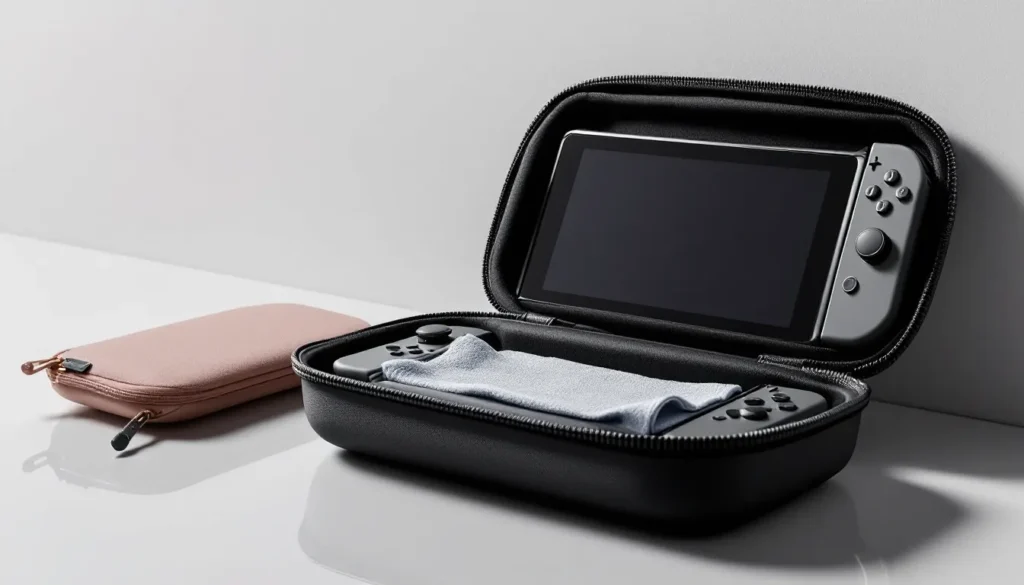
Dedicated carrying cases are designed for transportation more than active gameplay protection. They feature padded interiors, compartments for extra Joy-Cons and games, and straps for easy portability.
These cases shine when your Switch spends time in transit, flights, car trips, visits to friends’ houses. They’re bulky for casual carry-around but essential for road warriors. Many serious gamers use a thin silicone cover for daily play combined with a travel case for transport. This hybrid approach balances protection with usability.
Key Features to Look For in a Nintendo Switch Cover
Material Quality and Durability
Not all plastic is created equal. TPU (thermoplastic polyurethane) and premium polycarbonate outlast cheaper plastics by years. Check reviews specifically mentioning longevity, if a cover is yellowing or cracking after 6 months, the material isn’t holding up.
For silicone covers, medical-grade or food-grade silicone lasts longer than generic rubber. It resists staining and doesn’t degrade as quickly. Seams matter too, reinforced stitching on flip cases prevents splitting at stress points.
Drop Protection and Impact Resistance
This is where specs actually matter. Look for covers that specify drop-tested protection (ideally to 3-4 feet minimum). Hard shells with raised bezels protect the screen and Joy-Con bumpers, the most vulnerable parts of the system.
Cushioning thickness in hard shells should be at least 2-3mm: thinner shells provide cosmetic protection only. Silicone covers alone won’t save your Switch from serious falls, so don’t expect them to. If you frequently transport your system in a backpack with other gear, prioritize edge protection and corner reinforcement.
Design and Customization Options
Your cover is visible every single gaming session, so aesthetic matters. Premium covers come in dozens of colors and finishes, matte, glossy, textured, transparent. Some feature artwork, patterns, or character designs from popular games.
Customization options include modular designs where you swap colored shells or add accessories like thumb stick covers. Limited-edition designs matching specific games or consoles increase both cost and appeal for collectors. Balance looks with durability, transparent covers show off your console’s color but may yellow faster: matte finishes hide fingerprints better than glossy ones.
Grip and Comfort
You’re holding this thing for 2-4 hours at a time. A slippery cover creates hand fatigue and affects your play. Textured surfaces, curved grips, or cushioned padding make extended sessions comfortable.
Raised edges around the Joy-Con and screen prevent your thumbs from accidentally hitting the buttons while holding. Some covers feature thumb stick grooves that match your grip pattern naturally. Test a cover if possible, or trust reviews mentioning comfort during long gaming marathons.
Nintendo Switch vs. Nintendo Switch OLED Covers: What’s the Difference
Here’s the critical detail many buyers miss: not all Nintendo Switch covers fit all Switch models. The original Switch and Switch Lite have different dimensions, and the Switch OLED is different again.
The original Switch and Switch OLED are nearly identical in size, covers designed for one typically fit the other. But, the Switch Lite is noticeably smaller and uses different Joy-Con attachment points. A cover designed for the original Switch will not fit the Switch Lite, and vice versa.
The Switch OLED features a larger, brighter screen and subtle frame differences compared to the original. While most standard covers fit both, some designs optimized for OLED may have slightly adjusted screen cutouts for better edge protection on the larger display. When shopping, always verify compatibility with your specific model, manufacturers list this clearly in product descriptions.
One advantage of the Switch OLED: its increased durability and better build quality mean covers don’t need to compensate for hardware fragility as much. But protection is still worth the investment, especially if you’re maxing out the larger, more expensive OLED model.
How to Choose the Right Cover for Your Gaming Style
For Portable, On-The-Go Gamers
If your Switch lives in your bag and gets pulled out on commutes, lunch breaks, and trips, durability against impacts during transport is everything. Prioritize hard shell cases with reinforced corners or a hybrid approach: a thin silicone grip cover for comfort plus a dedicated travel case for backpack transport.
Features you need: drop protection, compact size that fits standard backpacks, good grip, and screen protection (flip cases excel here). Avoid cases so thick they won’t fit easily into a laptop bag or backpack alongside other gear. Traveling gamers often appreciate modular designs where you add protective layers based on your trip length.
For Desk-Based or Home Play
If your Switch rarely leaves your desk or stays docked most of the time, protection requirements shift. A slim silicone cover prevents scratches during the transition between docked and handheld modes, and a simple case keeps dust off when not in use.
Features you need: lightweight, aesthetically pleasing (it’s always visible on your desk), good grip for comfort during longer sessions, and minimal bulk. Thick hard shells are overkill here. Flip cases work well if you use tabletop mode for streaming or local multiplayer. Design becomes more important than impact protection when the console isn’t traveling.
For Serious Collectors and Enthusiasts
Collectors want zero visible damage and often keep systems in pristine condition. The cover itself needs to match your aesthetic standards while providing invisible protection.
Features you need: premium materials, transparent or matching color options, reinforced durability that won’t degrade or discolor, and sometimes custom or limited-edition designs. Many collectors use soft silicone covers that don’t alter the console’s appearance, paired with protective storage. Some invest in display cases with acrylic covers that showcase the system while providing environmental protection. A Nintendo Switch Charging Cable that matches your setup also helps maintain that cohesive aesthetic you’re after.
Installation and Maintenance Tips
How to Apply a Cover Correctly
Rushing installation destroys the fit. Start by cleaning your Switch completely, dust and fingerprints trapped under a cover degrade the console and look terrible. Use a microfiber cloth and, if needed, isopropyl alcohol on the exterior.
For hard shell cases, align the Joy-Con controllers first, then slide the system into the shell bottom-up or side-to-side depending on the design. Don’t force it: if it doesn’t slide smoothly, check for misalignment. Apply gentle, even pressure, the case should snap into place without excessive clicking.
For silicone covers, start at one end and roll it onto the system gradually, working out air bubbles as you go. Stretching it too aggressively can tear the material. Take your time: a silicone cover applied correctly will sit flush without gaps.
Flip cases and folios require careful alignment of screen cutouts before securing closures or snaps. Most come with adhesive strips or clips, test these before fully committing, as repositioning can be tricky.
Cleaning and Care Best Practices
Keep your cover and console clean to prevent material degradation. Monthly, wipe down the exterior with a dry or slightly damp microfiber cloth. For stubborn dirt on silicone covers, a mild soap solution works: dry immediately afterward.
Never soak covers or immerse them in water, even if they’re advertised as “water-resistant.” Heat damages both hard shells and silicone, keep covers away from direct sunlight and hot cars. Silicone covers especially can degrade if exposed to sustained heat.
Inspect seams and edges monthly for signs of wear. Reinforced stitching on flip cases can fray at stress points: address this early with a small stitch before it widens. Hard shells can develop hairline cracks that expand over time, monitor these and replace if they begin to compromise protection.
Remove your cover annually to inspect the console underneath. Trapped moisture or debris can damage the system. If you notice discoloration or staining that won’t clean off, it’s time for a new cover.
Common Mistakes to Avoid When Buying a Nintendo Switch Cover
Ignoring compatibility. The single biggest mistake: buying a cover without verifying it fits your specific Switch model. Original Switch, Switch Lite, and Switch OLED all have different dimensions. Triple-check the product description before checking out.
Assuming thicker always means better protection. A 5mm hard shell provides better protection than a 10mm silicone cover. Material matters more than thickness. Rigid construction beats soft bulk.
Overlooking long-term durability in reviews. A cover might feel premium for the first month but yellow, crack, or lose grip after 6 months. Search for reviews specifically mentioning durability after extended use (3+ months). Quick reviews from the first week miss material degradation.
Choosing style over comfort. That beautiful designer cover might look sick on your desk but make your hands ache during a 3-hour Zelda session. Always prioritize ergonomics if you use handheld mode frequently. Some gaming guides from Nintendo Life highlight which covers actually feel good in extended use.
Buying without understanding your actual needs. A competitive player who transports their system daily has completely different requirements than someone who plays exclusively at home. Assess your lifestyle honestly before buying.
Trusting only the cheapest option. $5 covers exist for a reason, they fail quickly. Budget $15-30 for a decent cover and $30-50 for premium protection. It’s insurance for a $300+ device.
Missing OLED-specific improvements. Some newer covers optimize for the Switch OLED’s larger screen with adjusted cutouts and specialized bumpers. If you own an OLED, these are worth the slight premium. When comparing across models, publications like Digital Trends often benchmark protection differences systematically.
Forgetting about your Joy-Con grips. Some hard shells put pressure on Joy-Con controllers, causing them to wear prematurely where they connect. Ensure the cover has properly sized Joy-Con slots with adequate clearance. Bent Joy-Con rails are a separate repair headache you want to avoid.
Conclusion
A Nintendo Switch cover is one of the most practical purchases a gamer can make. The right choice depends on your playstyle, environment, and aesthetic preferences, but investing in solid protection pays dividends over years of ownership.
Hard shells excel for travelers and drop-prone situations. Silicone covers work for everyday comfort and casual protection. Flip cases suit tabletop enthusiasts. Travel cases are essential for road trips. Many gamers benefit from combining approaches: a lightweight silicone cover for daily use with a carrying case for transport.
Whatever you choose, buy something. Your Switch will thank you when it survives a drop, avoids scratches in a backpack, or simply feels better in your hands during a gaming marathon. Check compatibility with your model, read reviews mentioning long-term durability, and prioritize the features that matter most to your gaming lifestyle. When it’s time to upgrade or sell your system years from now, you’ll be glad you protected it along the way.
For additional accessories that complement your cover, explore other essential Nintendo Switch Joy Con upgrades and ensure your system is fully equipped for your gaming needs. You might also want to check out Nintendo Switch headset options to round out your setup, and if you’re considering a model refresh, Black Friday Nintendo Switch Lite deals often provide excellent value. For home setup users, understanding how to set up your Switch on a television maximizes your gaming potential, and if you ever experience dock issues, troubleshooting a Switch dock will get you back in action quickly.